Holding out for a Hero!

HOLDING OUT FOR A HERO

Humanity loves and longs for true heroes. One of the traits present in older literary texts is man’s infatuation with heroes and heroines. Writing, theater, folk lore, and contemporary entertainments are replete with epic stories of daring rescues, challenges, triumphs, and tragedies. The Oscar Award ceremony recently highlighted this fascination with the heroic in the montage of hero scenes presented during the program. (To see video follow this hyperlink or enter the URL in your browser: http://screencrush.com/heroes-montage-2014-oscars/)

Based on evidence gleaned from ancient texts, such as Homer’s Iliad and Odyssey, The Epic of Gilgamesh, and Virgil’s Aeneid, hero worship has been around for ages. Wayfaring wanderers facing trials and tasks that no man could overcome, except by the intervention of a supernatural force, is an element that appears frequently in the lines of these stories. Mortals capable of performing tasks often reserved for the immortal is a recurring refrain that captures the hope of humanity that man may one day have the potential to rise to a higher level of experience in life.

Interplay of the Mortal and Immortal

Ironically, the same immortal powers who determine to aid the mortals in conquest are also often to blame for the hardships that they encounter. As Penelope and Telemachus pined for the husband and father, they assumed long dead, Odysseus was prevented from returning to his beloved land and family by the vengeful machinations of the god Poseidon and the lustful desire of Calypso. Instead, he was left wistfully weeping for home upon a cliff towering above the far off island. Eventually the other gods take pity on the forlorn hero, because of his courage and honor, by devising a plan to return him home despite the intentions of the offended deity. In addition, through a series of events and challenges, orchestrated by the Olympians, Telemachus grows from a scared and bullied boy into a strong and mature man.

Ultimately, the shipwrecked warrior is allowed to return to his home and family in Ithaca. Secretly returned to his family and disguised by the goddess Athena, Odysseus exacts his revenge, slaying the squatting suitors who had designs on claiming his rightful place in his home and with his wife. Because of his honor, his desire for family and country, and his bravery in the face on impossible obstacles, Odysseus is a hero for the ages.

The World Loves Hero Stories

Whether originally told in the lands of the Greek, Hebrew, Asian, Chinese, Roman, German, Scandinavian, Celtic, Australian, or American cultures, possible sources of hero stories circle the globe. From Hercules in Roman mythology, Thor among the Norse gods, American legends and tall tales of the men in the Wild West, and even the comic adventures of Crocodile Dundee from the back country of Australia, there are myriad stories of conquest, betrayal, heroic deeds, and warrior songs. Plentiful are the romantic fictions where the hero saves the day and woos the fair damsel’s heart. Readers of all ages and cultures seem to long for these stories of men and women who are larger than life.

The Bible offers hero stories of men who performed miraculous feats through the agency of God’s presence and power of His spirit. One such hero would be mighty Samson (Judges 13-16). Samson was born different and set apart for special assignment by God. Blessed with great strength, Samson won many battles and brought great victories against the Philistines. Samson, however, also lost battles that every human faces. The battle against pride and self-aggrandizement comes, and Samson falls. The battle of lust and sensual desire comes, and Samson falls. The wounds of those battles leave Samson bald, blind, and bound. In the end, however, the hero rises one last time in a feat of strength and total sacrifice and his final performance in the closing act of the drama of the hero’s life “brings down the house.”

Are There Still Heroes in Contemporary Culture?

Bonnie Tyler’s 1984 hit from the soundtrack of the movie “Footloose” reveals how this ancient infatuation with the characteristics of gods and heroes continues as she asks,

“Where have all the good men gone
And where are all the gods?
Where’s the street-wise Hercules
To fight the rising odds?
Isn’t there a white knight upon a fiery steed?
Late at night I toss and turn and dream of what I need”

(Steinman & Pitchford, 1984).

Ms. Tyler was holding out for a hero. According to her query, the traits of these mortals who defy the odds, and occasionally the gods, appeared to be lacking in the world. Her song is at the same time a mournful lament and a fervent plea.

Where have all the good men gone? Certainly, if one is looking for “white knights on fiery steeds,” there may be a lack of that specific display of heroism. The deeds of valor that the ancient world of myth and legend applaud do not regularly appear on the broadcasts of the daily cable news program.

I contend, however, that heroism is not a misty image in ancient literature. True heroes are alive in our modern world. They face obstacles and rise above them. Life’s circumstances challenge them, and they meet the challenge. Disaster strikes and they respond. Terror bears its fearsome fangs and they answer, sacrificially accepting its sting.

“Let’s Roll!”

On a sunny Tuesday morning in early September, Todd Beamer boarded a plane in Newark, NJ bound for San Francisco. Beamer and the other 37 passengers on that flight, along with several crewmembers, had no idea that they would soon face a terrible challenge and have to make a critical decision that would result in a high cost, but an even greater value in terms of innocent lives spared.

Shortly after taking off that morning, hijackers took control of that flight and three others over the United States. Within minutes, the hijackers intentionally flew two of those planes into both Twin Towers in New York City. A third was purposely crashed into the side of The Pentagon in Washington, DC. News of the events that morning reached the passengers on Beamer’s flight through telephone communication. It became clear that their flight would also be used as a weapon against an unsuspecting target on the ground. Determined “not be pawns in the hijackers’ suicidal plot” (McKinnon, 2001) Beamer and the other hostages rose up and fought their captors. One can only speculate what exactly transpired in the plane. What we do know is that the aircraft, initially aimed at a target in Washington, potentially the White House, began to fly erratically through the sky before mysteriously crashing in a field in Pennsylvania, killing everyone aboard, far from the terrorist’s intended target.

The tragic events of 9/11 are etched in the memories of all who endured that terrifying day in American history, riveted to the news programs that brought us the latest details. Beamer’s last recorded words, “Let’s Roll!” captured the nature of a hero’s heart and garnered the attention and affection of the world. His words became a slogan that characterized the renewed sense of patriotism and rally cry for action felt throughout the country. Indeed, the passengers of flight 93 who sacrificed themselves to fight back earned a seat at the hero’s banquet, along with the many others who acted bravely and sacrificed so much to give others a chance to live on that day.

Recognizing the Everyday Heroes

Odysseus and Aeneas demonstrate impossible feats and amazing displays of strength and courage However, these actions are not the only traits that make a person a hero. One can see true heroism in the ordinary lives of people who live lives with integrity, honor, humility, and service. If you ask the family of Todd Beamer, they will tell you that he was a hero long before he gained notoriety by his sacrifice on 9/11. According to Beamer’s wife, Lisa, her family was well aware of the “kind of person Todd was. We know he’s in heaven. He was saved. Just knowing that when the crisis came up he maintained the same character we all knew, it’s a testament to what real faith means” (McKinnon, 2001).

There are often simple acts of bravery, service and sacrifice that we take for granted. A person reaching out to an outcast is a hero. A student who confronts to the school bully is a hero. A first responder holding the hands of a terrified passenger in a wrecked car is a hero. A person who holds the door for another with an armload of groceries is a hero. The donor whose gift of blood saves the life of a disaster victim is a hero. Heroic deeds do not have a standard they must measure up to in order to be considered heroic. These actions simply have to be viewed as heroic by the one who benefits from the act, and others who bear witness to it.

The World is Still Holding out for a Hero

Why are stories about heroes and heroines so popular still today? Perhaps it is because the world still needs heroes. Humanity still longs for someone heroic to rise up and claim victory. As long as tragedy continues to be a part of the human experience, humanity will long for, and even create stories about, heroes.

This very drive and hunger in humankind for a hero is a trait that God can use to draw men to the greatest hero ever to live and die, Jesus Christ. This heavenly Hero wrestled with the power of sin in the path of the full fury of the one true and holy God and was victorious, gaining, through His sacrifice, eternal life in heaven for all who would believe. If someone is going to hold out for a hero, invite them to look to the bloodied cross, the empty grave, and the heavenly throne. Invite them to look to Jesus!

References

McKinnon, J. (2001) The phone line from Flight 93 was still open when a GTE operator heard Todd Beamer say: ‘Are you guys ready? Let’s roll.’ Printed in the Post-Gazette. September 16, 2001. Retrieved from: http://old.post-gazette.com/headlines/20010916phonecallnat3p3.asp

Romano, N. (2014). Heroes Montage From the 2014 Oscars retrieved from http://screencrush.com/heroes-montage-2014-oscars/ on March 25, 2014.

Steinman, J. & Pitchford, D. (1984). Holding out for a Hero [Recorded by Bonnie Tyler]. On Footloose Soundtrack. Washington, DC: Columbia Records.


Passion and Romance from Antiquity to Now

-Dave Bentley

(photo from: http://www.scienceofrelationships.com/home/tag/love)

Disclaimer: Please note that the following article contains clear descriptions of passion, lust, desire and sex and may not be acceptable to all readers.  If you are offended by these subjects please do not read this article.  This is an attempt to show, in a tasteful and cultured way, how these elements have been part of love and romance specifically in marriage from the beginning of time.  Sadly, humanity has distorted and abused what was intended from the start to bring unity and intimacy so that now they more often bring division and shame

Love in Its Many Forms

Love is a confusing and complicated subject. Just asking the meaning of love can lead to deep and debated discussion. The Greek language uses four different words to relate to differing levels of love. Agape, a love built on commitment and unconditional acceptance, occasionally called the “Christ love.” Phileo is something akin to brotherly love or affection and friendship. Storge is the more binding love of parents, children, and other familial connection.

To this noble list, we blush to add the hot sultry love that is often the subject of whispered conversation. Eros is the steamy love of physical attraction, sexual desire, and human sensuality. This Greek word forms the root of the term erotic. Sadly, this word is often used to refer to something far removed from its original purity and passion intended in the beginning of male and female relations. Understanding human nature and varied needs, and the divine design intended by the creator can elevate Eros from its position in the shadows to the pinnacle of passion and purity intended to be experienced by husband and wife.

Ancient Answers to Contemporary Questions

Modern society strives to instruct young people in love, but often leaves them confused and bewildered as it seeks to secularize, sanitize, socialize and sexualize the subject, while failing to spiritualize it by connecting love to its source. Forty years ago Dr. James Dobson (1975) wrote that young people, through education, media, and peer pressure, were being “taught to confuse the real thing with infatuation and to idealize marriage into something it can never be” (p. 84). Perhaps the best advice one can offer these love hungry youths, seeking answers concerning love and romance in relationships, is to direct them back to the wisdom of historic texts. This age-old sage advice is not limited just to the teachings of the Scriptures, but is also found in the experiences of loves through the ages.

Ancient poetry and literature offer a telling glimpse into love and romance that contemporary humanity may not realize was present millennia ago. Stories told in modern movies and novellas often relate a kind of utilitarian relationship that existed in the form of arranged marriages, lacking in love and romance, for the primary purpose of bringing forth offspring, providing work hands, and developing community. This perspective, however, does not seem present in ancient love poems and stories of antiquity. In fact, these lyrics and tales speak of a naked and expressive passion that existed between men and women and illustrates how the needs, drives, and loves of each gender were articulated long before any contemplation that men are Martians and women Venusian. (Gray, 2012).

The First Love Lyrics

The first love song spoken from a man to a woman was uttered immediately after the creation of man’s compliment, woman. I do not know what the linguistic sounds of the song were, but the intent is evident. The creator had fostered, on purpose, a deep desire in the man for a suitable companion. His intent was that man would find in the mate God would create the completion that he realized was lacking. The account appears in Genesis 2:20-25.

For Adam no suitable helper was found. So the LORD God caused the man to fall into a deep sleep; and while he was sleeping, he took one of the man’s ribs and closed up the place with flesh. Then the LORD God made a woman from the rib he had taken out of the man, and he brought her to the man.
     The man said,
“This is now bone of my bones
     and flesh of my flesh;
she shall be called ‘woman, ‘
     for she was taken out of man.”
For this reason a man will leave his father and mother and be united to his wife, and they will become one flesh (New International Version).

One student of Literature, Whitney Bonheim, (Bonheim, 2014) advanced the following consideration in a discussion related to romantic love and the creation of Adam and Eve. She commented that Eve was not created in the same way God created Adam, perhaps as evidence of God’s intent to reveal in the marriage union the design of love itself. Having Eve fashioned from components taken from Adam illustrates the physical and emotional elements of romantic and committed love between man and woman. Regarding the unique design of the romantic and sexual union of man and woman Bonheim writes,

“that love is created of two beings, connected from the start. Just as man was created in the likeness of God, Eve was created from the body of Adam, holding within her flesh the divine love that had been issued to humankind by the Creator” (Retrieved 3/20/14).

Humanity continues to strive for social connection, relationship, and love precisely because we have been designed and created to love and be loved.

Following the introduction of the first couple in the Garden of Eden there is this addendum about the initial purity and passion that humanity experienced, prior to the entry of sin and rebellion in to the “Good” of God’s creation:

The man and his wife were both naked, and they felt no shame (Genesis 2.25).

Unfortunately, the purity of this sacred moment would not be long-lived. Genesis 3.7-8 finds our inaugural couple hastily covering their nakedness and hiding from the approaching footsteps of the divine Creator. Never again would the kind of unashamed physical and relational intimacy they had known in the beginning exist between man and woman. Sin shattered the divinely devised relationship. Shame and condemnation drove human sexuality into hiding, known henceforth only in darkened bedrooms behind closed doors, thus distorting the gift by which God had intended to demonstrate the deep internal love that He has for His creation. As rebellious humanity fled to their hiding place, their action brought distance and division in place of intimacy with each other and with God. Even after experiencing the redemption of Christ’s death, burial, and resurrection, the pure intimacy of Genesis 2 remains elusive The sin nature of “flesh” continues to linger even in those released, for whom “there is therefore now no condemnation” (Romans 8.1).

Romance and Love: A Mingling of Sights and Sighs

In spite of the shame that sin introduced into the realm of human sexuality, humanity continues to hunger for love and sexual fulfillment. The ancient texts of love poems relate that longing in even the earliest of manuscripts. Physical passion and longing for romance grace each pen-stroke. In “Last night, as I, the queen, was shining bright” these steamy words comprise three lines:

“While we by the moonlight indulge our passion, I will prepare for you a bed pure, sweet, and noble, Will while away the sweet time with you in joyful fulfillment” (Damrosch & Pike, 2009, p. 42).

This oldest of ancient texts reveals a depth of passion that breaks through the expectation of a utilitarian love and romance. Indulging passions and joyful fulfillment are not the dry lack-“lust”er words that one might associate with historic romance. Add to sentiments such as these this brief passage from “The Epic of Gilgamesh” and a reader may find they need to fan themselves because of the heat and humidity produced by such erotic passion.

Shamhat unclutched her bosom, exposed her sex, and he took in her voluptuousness.
She was not restrained, but took his energy.
She spread out her robe and he lay upon her,
she performed for the primitive the task of womankind.
His lust groaned over her;
for six days and seven nights Enkidu stayed aroused,
and had intercourse with the harlot
until he was sated with her charms (Damrosch & Pike, 2009, p. 62).

These old texts offer more, however, than just erotic images of sex and physical pleasure. In fact, there appears to be much affection and commitment demonstrated in these ancient texts. Consider this line from “The Voice of the turtledove speaks out,” as the lovers offer this greeting card worthy sentiment.

“We said: I shall never be far away from you while my hand is in your hand, and I shall stroll with you in every favorite place” (Damrosch & Pike, 2009, p. 44).

Another thing that these historic love songs illustrate is the difference between the drives and needs men and women. Gary Chapman (1992) wrote a bestselling book on relationships called The Five Love Languages. Borrowing from his years of counseling couples he delineated the communication and reception of love in such a way as to fit into five basic categories: (1) Physical touch; (2) Quality time; (3) Words of affirmation; (4) Acts of service; and (5) Receiving gifts. In some way, each person on the planet will fit in one or two of these categories in regard to how they communicate and receive love. When I first read this book I thought the message was revolutionary and provided new insight. However, these ancient poems and love songs offer evidence of the presence of these “love languages” in how they communicate love and romance from the male and female perspective.

Men, as most modern advertisers are obviously aware, are often captivated and infatuated with the vision of beauty, attracted by the physical, before learning what lies beneath the surface of woman. Women, on the other hand tend to seek security and provision, in addition to romance and feeling. She would like to be wooed, whereas the man needs to be wowed.

“One, the lady love without a duplicate” is a poem brimming with physical descriptions. My assumption is that a man with a specific woman in mind wrote this poem. Consider this example from the poem:

Her buttocks droop when her waist is girt,
her legs reveal her perfection;
her steps are pleasing when she walks the earth,
she takes my heart in her embrace.

She turns the head of every man,
all captivated at the sight of her;
everyone who embraces her rejoices,
for he has become the most successful of lovers

(Damrosch & Pike, 2009, p. 44-45).

The very vivid description of the subject’s physical appearance and identification as the prize of the successful lover suggests man’s drive to conquest.

Further evidence of the poetic reference to the physical drives of man is the fourth chapter of the Song of Songs which offers an expressively erotic image in the description of the woman. In a very sensual passage, the author engages the senses of sight, smell, touch and taste in the course of these verses, and if one considers the sounds of wind, the rippling of water in a fountain, and the subtle smack of lips in a kiss, the sense of hearing is present as well.

Conclusion

Romantic and sensual love is evident in the most ancient of texts. These early writings capture a pure and passionately erotic love vividly expressed between man and woman. Unfortunately, just using the word erotic in modern society conjures up thoughts and images of scandalous impurity.

The Creator’s intent and design, however, was for humanity to express and experience love in a deep and intimate way, as evident from the physical construction of our bodies and the emotional structure of our hearts and minds. He wanted us to love and be loved in return. He has made us with the capacity for love on all levels. Perhaps it is the longing for a return to purity that drives us to read love stories and watch romantic films. We have been internally wired for love and long to have that activated in us.

References:

Bonheim, W. (2014) Discussion Board Post for ENG656 at Liberty University Online.

Retrieved from: http://learn.liberty.edu/webapps/portal/frameset.jsp?tab_tab_group_id=_2_1&url=/webapps/blackboard/execute/courseMain?course_id=_11067_1 on March 20, 2014.

Chapman, G. (1992). The Five Love Languages: How to Express Heartfelt

Commitment to Your Mate. Chicago, IL: Northfield Publishing.

Damrosch, D. & Pike D. L. (2009). The Longman Anthology: World Literature.

(Vol. A. 2nd. Ed.) New York, NY: Pearson.

Dobson, J. (1975). What Wives with their Husbands Knew about Women.

Wheaton, IL: Tyndale.

Gray, J. (2012). Men are From Mars, Women are from Venus. New York, NY:

Harper Collins Publishing.

Directives for Disciples: The Beatitudes

imagesQESEP4W1

MATTHEW SERIES: THE KING AND HIS KINGDOM

The Beatitudes: Directives For Disciples (Message 4)

Matthew 5:6

Blessed are those who

HUNGER and THIRST for RIGHTEOUSNESS,

for they will be FILLED.

DEFINITION: WHAT IT MEANS TO HUNGER & THIRST

We Can’t Comprehend That Kind Of Hunger:

Not just any hunger, but the hunger of a man who hadn’t eaten in a week and didn’t know from where his next meal would come. A man who could probably only eat meat once a month if he was lucky.

We Can’t Comprehend That Kind Of Thirst:

The kind of thirst that comes from having sand in your throat and nostrils, in the heat of the dry dessert, with no cold water tap in sight, let alone a stream or a pond from which a small relief could be found.

Psalms 42.1-2

1 As the deer PANTS for streams of water,
     so my soul PANTS for you, O God.
2 My soul THIRSTS for God, for the living God.
     When can I go and meet with God?

To hunger and thirst for righteousness would therefore be

  • Intense (a matter of life or death)
  • All consuming (consuming time, resources, efforts, passions)
  • Challenging (all the beatitudes are a challenge)

APPLICATION: RIGHTEOUSNESS IN 2014

Question: What is Righteousness? If we are to hunger and thirst for something, perhaps we should know what that something is.

Life Application Bible Commentary on RIGHTEOUSNESS:

Refers to a personal righteousness—being so filled with God that the person completely does God’s will, without tripping up, sinning, making mistakes, and disappointing God. Righteousness refers to total discipleship and complete obedience. It may also refer to righteousness for the entire world—an end to the sin and evil that fill it.

Those who hunger and thirst for righteousness experience

that longing in at least three forms:

  • The desire to be righteous—to be forgiven and accepted by God; right with God.
  • The desire to do what is right—do what God commands
  • The desire to see right done—to help bring about God’s will in the world.

The Greek word refers to a “WHOLE RIGHTEOUSNESS” (APPLICATION)

  • PERMEATES! – Affects every aspect of life
    • public and private
    • work and home
    • All the time, Every Day…Not just Sundays
  • PENETRATES! – A righteousness on the inside as well as the outside
  • DEMONSTRATES! A righteousness according to the kingdom of God, not man.

A Warning To The “Well Fed” Luke 6:20-26 (Focus on v. 25)

20 Looking at his disciples, he said:
“Blessed are you who are poor,
     for yours is the kingdom of God.
21 Blessed are you who hunger now,
     for you will be satisfied.
Blessed are you who weep now,
     for you will laugh.
22 Blessed are you when men hate you,
     when they exclude you and insult you
     and reject your name as evil,
     because of the Son of Man.
23 “Rejoice in that day and leap for joy, because great is your reward in heaven. For that is how their fathers treated the prophets.

24 “But woe to you who are rich,
     for you have already received your comfort.
25 Woe to you who are well fed now,
     for you will go hungry.
Woe to you who laugh now,
     for you will mourn and weep.
26 Woe to you when all men speak well of you,
     for that is how their fathers treated the false prophets.

“WOE” is the Exact Opposite of “BLESSED”

  • They trust in their own righteousness.
    • “Apart from Jesus my righteousness is like filthy rags”
  • Appear to be righteous on the outside, but inside…

SATISFACTION – They Will be Filled

The word for “filled” (chortasthēsontai) means to feed or to fatten cattle from the word for fodder or grass like Mark 6:39 “green grass” (chortos chlōros).

—Robertson, A. T. Word Pictures in the New Testament

  • Deeply Satisfied
  • Longings and Desires Met
  • Hunger and Thirst Abated

INVITATION

  • Empty yourself and become hungry and thirsty for righteousness.
    • Seek ye first the kingdom of God and His righteousness
  • Remember that you will indeed be satisfied, don’t ever stop hungering…

Pastor’s Letter of Appreciation to FBC Wallingford, VT

A Letter from Pastor Dave to members and friends of
First Baptist Church in Wallingford, Vermont

March 21, 2014

Dear Church Family,

I hope that you won’t mind if I gush just a little in the affection and appreciation that I have for our church family.  Thank you!  Thank you!  Thank you!  Thank you for your prayers and support.  Thank you for your understanding.  Thank you for the love that you show to your new pastor and his family in so many ways.  Thank you for your commitment to the Lord and His ministry here in Wallingford.  You have blessed and touched my heart.

When we started ministry here at the beginning of the year I had already committed to take three challenging classes during this semester at Liberty University.  I had no idea, however, how difficult the eight weeks would be, especially the last part of the journey.  The past few weeks have put me through the wringer physically, emotionally, and spiritually.  Consider:

•    Mom and Step Dad with cancer surgery  within 10 days of each other
•    Three Major Writing Assignments Due in extremely difficult classes
•    Stormy weather and slick roads
•    Unexpected Car repairs courtesy of “The Grand Canyon” of pot holes

Please believe me when I say, I am not complaining.  In fact, this has become an opportunity to praise God for His grace and strength in the midst of difficulty.  I know that I could not have managed all that has happened without His presence and your prayers. 

I know that, if I had been aware in the Fall what challenges would come in the winter I would have changed my plans dramatically.  However, God has allowed me to endure this to remind me of His sufficiency for every circumstance.  For example, the classes I took for the first eight weeks of the term were very technical and demanding classes related to advanced grammar and the origin and spread of the English language.  The readings were among the most difficult I have ever had to do.  The writing required was more than I have ever had to do for any class.  In the end I had three major writing assignments due at the close of the courses.  I said a number of times in the closing days that I would be fortunate to get a C in the classes because I had not been able to devote the time and effort to them I felt they needed.  However, the papers were graded and the final report is as follows. 

•    On the biggest and most difficult assignment, which I was sure I would just squeak by on, I received a near perfect grade and was heralded as “the best in the class!”
•    On the other two assignments, though I wasn’t as concerned with them, I received a perfect score and a near perfect score. 
•    My final grade was a solid A!

If I sound like I’m boasting it’s because I am.  I boast in God who has once again amazed me in taking care of every detail and providing what I needed most exactly when it was needed.  I boast in my new church family who has prayerfully supported their new pastor and lifted me up in their prayers.  I boast in my wife who has endured several weeks of having me so fully engaged in these writing assignments in every spare moment that I have been of little help to her in her endeavors.  I have reason to boast because God is so good, and He has surrounded me with people who are wonderful.

Many Blessings,
Pastor Dave

Directives for Disciples: The Beatitudes

imagesQESEP4W1

(Part of: MATTHEW SERMON SERIES: THE KING AND HIS KINGDOM)

INTRODUCTION TO SERIES:

Because we are currently in a sermon series, this is essentially a “Series in a Series.”

Typical “When & Then thinking.”

  • “When I get a good job, then I’ll be happy.”
  • “When I find the right mate, then I’ll be happy.”
  • “When I have kids, then I’ll be happy.”
  • “When the kids leave home, then I’ll be happy.”

We think outward circumstances bring contentment.

But Jesus tells us the opposite is true. He insists that happiness doesn’t come from the external circumstances, but rather from an internal condition..

IT WILL REQUIRE A SHIFT IN OUR THINKING

I almost titled this series SHIFT because that’s what these verse challenge us to do, to have a shift in our common mind-set, the way that we view things.  To change how we think about success, happiness, and blessings.  Because, as we will discover in the first message of the series, much of what Jesus says brings us contentment are a complete 180 degree turn from what we often think.

DIRECTIVES FOR DISCIPLES (Part 1)

First, Understanding The Word:

Blessed (Greek: Μακάριοι – Ma-ka-ri-oi)

  • The word “blessed” means happiness.
  • The Greek word is emphatic, it means “happiness many times over.”
  • Refers to a happiness that is not conditional on circumstances

The Basic Outline of Our Messages

  • DEFINITION: What Jesus Means in What He Says
  • APPLICATION: How It Applies in our Lives Today
  • SATISFACTION: The Promise the Directive Offers

“Blessed are the poor in spirit,

for theirs is the kingdom of heaven.”

· Jesus could of hardly produced a more startling beginning.

· Happy are the poor?

THE DEFINITION – WHAT DOES IT MEAN?

What it Doesn’t Mean:

  • · “Blessed in spirit are those who are poor.” Nothing to do with possessions.
  • · Not About Self-Debasement
    • He’s not saying that happiness comes when you put yourself down. “Oh, I’m no good, I’m junk, I’m lousy.” In fact, Jesus did not die for junk. He went to the cross because you are that important to Him.

What it Does Mean:

  • To be totally dependent on God.
  • Realizing our spiritual deficiencies.
  • It means admitting I am a sinner
  • It means emptying ourselves of our selfishness.
  • In a word it is humility.

“God blesses those

WHO REALIZE THEIR NEED FOR HIM,

for the Kingdom of Heaven is given to them.

(New Living Translation)

Jesus Said it and Lived It:

Read Philippians 2.5-11

THE APPLICATION – WHY DOES IT MATTER?

Read Luke 18.18-24

Demonstrates Two Problems The Rich Young Ruler Had:

  • Thought of Himself as Good (Good teacher…I have done all that…)
  • Expected to Buy/Earn Eternal Life (What must I DO)

Elevates Why Jesus Came:

  • Pay as you go is not the way it works.
  • We don’t need a system, we need a Savior.
  • We don’t need a resume, we need a Redeemer.

Illustrates the Dilemma Mankind Faces

  • A Recognized Need – Emptiness
  • We Want to FIX IT!
  • We can’t accept that we NEED someone to do it for us.

Please grasp this principle: you are nothing without God!

THE SATISFACTION – WHAT IS THE OUTCOME?

“We “inherit THE KINGDOM OF HEAVEN.”

The kingdom of heaven is not just a physical place of eternity, it is a way of life.

A Way of Life that Experiences God’s Grace.

Read James 4:6

A Way of Life that Reduces Stress.

Read Psalm 131

A Way of Life that Improves my Relationships with Others.

A Way of Life that Provides Contentment.

Take a Look at A Changed Life:

  • Saul Had Been: Legalist…Persecutor…Leader
  • AND THEN ACTS 9 HAPPENS
  • Paul Becomes: Liberator…Pastor…Servant

“Blessed are the poor in spirit

for theirs is the kingdom heaven.”

One Thing I Ask…

Something to Contemplate:

I’m asking God for one thing, only one thing: To live with him in his house my whole life long.  I’ll contemplate his beauty; I’ll study at his feet.  That’s the only
quiet, secure place in a noisy world; The perfect getaway, far from the buzz of traffic.                                     
Psalms 27:4-5 (The Message)

One thing, that’s all David wanted.  He makes an impassioned plea to live with God in the house of God.  As I considered his request this morning I believe that David was desiring more than the physical location of the house of God, but rather was seeking to dwell, to live, to abide in the constant presence of God. 

The church, where I am as I write this, is a perfect place for a little quiet and serenity, but I can’t live here.  I am going to be leaving shortly, and I want to be in God’s presence wherever I have to travel.  Thankfully, God is present in my life wherever I am, and I can fellowship with Him, speak with Him, and trust in Him no matter my location. 

So, today I join David in pleading with God, “One thing I ask, Lord, to be with you wherever I am.” 

We’re Pilgrim on the Journey

Journey Journal of First Baptist Wallingford, VT – March 2014

We’re Pilgrims on the Journey

-Pastor Dave Bentley

      • We’re Pilgrims on the journey of the narrow road
      • And those who’ve gone before us line the way
      • Cheering on the faithful, encouraging the weary
      • Their lives a stirring testament to God’s sustaining grace. (S. Green)

The words of this song by Steve Green have inspired me through the years as I have traveled this road with Jesus. It has not been easy traveling. The roads are not smooth and trouble-free. But there are things that can assist us in the travel if we will remember them on the road.

FIRST, WE ARE NOT ALONE

Having made several long trips through my life I have occasionally found myself on desolate and lonely roads. Some of those late night rides I have felt like I was the only person on the highway. While I’m not a fan of heavy traffic, the feeling of loneliness can be disheartening.

In Green’s songs we note that he writes in the plural. He doesn’t’ say “I am a pilgrim on a journey.” Rather “We’re (there’s more than one of us) Pilgrims (plural).” Look around, we are not on the road alone. His song goes on to remind us that there are others who have blazed the trail before us who cheer us on.

The Message, a translation of the Bible that reads more like a story, offers the following glimpse into this truth:

Do you see what this means—all these pioneers who blazed the way, all these veterans cheering us on? It means we’d better get on with it. Strip down, start running—and never quit! No extra spiritual fat, no parasitic sins. Keep your eyes on Jesus, who both began and finished this race we’re in. Study how he did it. Because he never lost sight of where he was headed—that exhilarating finish in and with God—he could put up with anything along the way: cross, shame, whatever. And now he’s there, in the place of honor, right alongside God. When you find yourselves flagging in your faith, go over that story again, item by item, that long litany of hostility he plowed through. That will shoot adrenaline into your souls!

                                                                 (Hebrews 12.1-3 The Message)

SECOND, WE HAVE A ROADMAP.

In Green’s song he says that we are pilgrims “on THE NARROW WAY.” This reminds us that God has ordained a path that we are to walk. The trail may not be identical for every traveler, but each step along the journey is intended to bring us closer to the Lord. Consider this message from the Psalmist:

If the LORD delights in a man’s way, he makes his steps firm; though he stumble, he will not fall, for the LORD upholds him with his hand.

                                                                                            (Psalm 37.23-24 NIV)

I would rather have God tell me I will never stumble and fall, but having the promise that He will uphold me is encouraging. The condition is that I need to be walking the path He has established for me, and that means I need to take time to seek that path in prayer and devotion as I search the Scripture and become better acquainted with God and His purpose for me. This is the preparation for the trip as we consult the Road map.

FINALLY, WE HAVE EACH OTHER

I may joke at times, and there may be added stress occasionally, but I am honestly much happier traveling with my wife on long trips than by myself. If I happen to miss a turn she helps me correct my error, and she encourages me to make sure I’m getting good directions. I am accountable to her as we travel, and she helps me avoid pitfalls and problems.

As members of God’s family we are more than people who fill a pew. We have several key roles that we play in the lives of our church family.

  • We are cheerleaders, offering encouragement
  • We are leaders, offering direction
  • We are partners, offering cooperation
  • We are witnesses, offering testimony
  • We are mentors, offering wisdom

There are more, but you get the idea. As we travel this journey we need to remember that we were never intended to do this alone. So, find out who your traveling companions are and let them know you look forward to enjoying the journey with them. I look forward to enjoying the journey with you.

Matthew Series: Do You Hear What I Hear?

January 26, 2014

Audio broadcasts of Messages are available here: https://sites.google.com/site/firstwallingford/sermons

  • Matthew Series: The King and His Kingdom
  • “Do You Hear What I Hear?”
  • Matthew 2.13-23

13 When they had gone, an angel of the Lord appeared to Joseph in a dream. “Get up,” he said, “take the child and his mother and escape to Egypt. Stay there until I tell you, for Herod is going to search for the child to kill him.”
14 SO HE GOT UP, took the child and his mother during the night and left for Egypt,
15 where he stayed until the death of Herod. And so was fulfilled what the Lord had said through the prophet: “Out of Egypt I called my son.”
16 When Herod realized that he had been outwitted by the Magi, HE WAS FURIOUS, and he gave orders to KILL ALL THE BOYS IN BETHLEHEM AND ITS VICINITY WHO WERE TWO YEARS OLD AND UNDER, in accordance with the time he had learned from the Magi.
17 Then what was said through the prophet Jeremiah was fulfilled:

18 “A voice is heard in Ramah, weeping and great mourning, Rachel weeping for her children and refusing to be comforted, BECAUSE THEY ARE NO MORE.”

 clip_image001

19 AFTER HEROD DIED, an angel of the Lord appeared in a dream to Joseph in Egypt
20 and said, “Get up, take the child and his mother and go to the land of Israel, for those who were trying to take the child’s life are dead.”
21 SO HE GOT UP, took the child and his mother and went to the land of Israel.

22 But when he heard that Archelaus was reigning in Judea in place of his father Herod, he was afraid to go there. Having been warned in a dream, he withdrew to the district of Galilee,
23 and he went and lived in a town called Nazareth. So was fulfilled what was said through the prophets: “He will be called a Nazarene.”

LISTEN – Do You Hear What I Hear?

· What Sounds do We Love To Hear?

· What Sounds do We Hate to Hear?

Last week on the way home our overly tired grand-daughter cried and screamed much of the way. That was a sound I didn’t like to hear.

· What Sounds Hurt Us to Hear? What Sounds Haunt us?

  • Soldiers are sometimes haunted by the sounds of war
  • Victims are pained by the sounds of hurtful memories
  • The grieving may ache for the sounds of loved one’s voices

Coming off the Christmas season and our look at the Christmas Narrative we have considered and heard a variety of sounds related to the majesty and wonder of Christ’s birth.

What are some of the sounds you have heard or thought about this Christmas? (List)

We probably have not thought about sounds of Anguish in this process, but that is the sound that immediately follows the Christmas story in the Gospel of Matthew.

17 Then what was said through the prophet Jeremiah was fulfilled:

18 “A voice is heard in Ramah, weeping and great mourning, Rachel weeping for her children and refusing to be comforted, because they are no more.”

So…we hear

  • The soft coos of the infant Savior
  • The gentle lullaby of Mary
  • The songs of glory from the heavens
  • The excited chatter of the shepherds
  • The soft sounds of the stable

But we also hear…

  • The angry shout of a lunatic king
  • The tromping of soldier’s feet
  • The smashing down of doors
  • The screams of grief-stricken parents
  • The silence of a murdered child

And the question is whispered: Where is God in the midst of this?

LOOK – Do You See What I See

The Depravity of Humanity

We see this as Herod Does Unspeakable Things Against Innocents

  • His throne is threatened by a Toddler King
  • To Eliminate the threat he tries to eliminate all boys under two years old.

We see this as Humanity Continues to Harm Innocents

Has the way that people view children changed in the past fifty years? How?

  • Abortion—as a means of birth control—is out of control
  • Child abuse and Neglect are the highest they have ever been
  • Violent crimes against children increase exponentially

So…we see

  • A peaceful nativity and precious swaddled infant
  • A star shining in the heavens
  • Angels winging their flight o’er the earth
  • Shepherds with their flocks
  • Wise men with their gifts

But we also see…

  • The crazed look of the mad monarch
  • The swift shine of a soldier sword
  • The broken mothers and fathers weeping on the floor
  • The lifeless little ones lying on the ground

And the question is whispered: Where is God in the midst of this?

LOVE – Do You Know What I Know

· The stories of Scripture and our history are not all peaceful and serene.

· Jesus entered a world that was vicious, sinful, and suffering.

· But, there are some things we can know and believe…because He Came

THERE IS SUFFERING – BUT GOD CAME TO BEAR IT WITH US

  • Christmas is a time of joy and celebration—“The Most Wonderful time of the year!”
  • But Christmas comes, as Jesus did, to a fallen and hurting world.
    • How many suffer through the holidays?
    • How many grieve for the past?
    • How many are lonely, and longing for love they can’t find?
    • How many sing “Joy to the World” but find no joy themselves?

Anguish is still a part of the Human scene…the Christmas scene today.

But…Christmas does come…Jesus does come, and He doesn’t promise to take away our suffering, but instead to be with us through the hurt and heart ache. After all…He is, in fact, Emmanuel, God with us.

Illustration: “Where is God?”

Eli Weisel, a Jewish author, who wrote the book entitled, “Night,” was a slave laborer in a WW2 German concentration camp. He writes about the Holocaust & the things that happened to him during the war.
One evening they returned after a day of slave labor to discover that 3 gallows had been erected in the center of the camp. Three prisoners were going to be executed, & the guards had orders to force all the other prisoners to stand & watch the executions. Two of the victims were men, but to their horror they saw that the third was only a small boy. Nooses were put around their necks, & all 3 were made to stand up on chairs. Then the chairs were kicked out from underneath them.
The 2 men died instantly as the weight of their bodies broke their necks. But the little boy was so light that his neck did not break. And there he hung, gasping for breath, dangling at the end of the rope. And the prisoners were forced to stand there & watch him for more than 30 minutes, until finally he died.
In the terribleness of that time, one of the men behind Weisel cried out, “You say that there is a God? Then where is He? Where is He now?”

THIS IS THE QUESTION THAT ECHOES THROUGH COMMUNITIES WRECKED WITH SORROW AND GRIEF IN THE MIDST OF LOSS.

Weisel said, “I turned back & looked at him & said,

“There He is. He is hanging at the end of a rope.”

EMMANUEL – God with us…even in the agony of life.

Not only is there suffering in the world that God has come to bear with us…

THERE IS UNCERTAINTY, GOD CAME TO LEAD US THROUGH IT

Certainly, there was tremendous sorry and agony as Herod’s soldiers carried out their gruesome orders and executed the baby boys throughout the land.

For Mary, Joseph, and their baby—though they had escaped—there was uncertainty ahead.

· Where would they live

  • When Andie and I left New York to go to West Virginia we weren’t sure where we would live. We had only been there once, and all we could base anything on was an inner sense that we needed to make this change in our lives. It was a time of great uncertainty for our young family.
  • When we answered God’s call and followed His leading to go to Bible college in Florida it was again a time of uncertainty. We only had the first couple of months managed, beyond that it would be totally up to God.

· What would they find when they arrived there?

When I went on mission to Barbados I went with someone who had been there numerous times before. I felt some sense of security knowing that he knew what to expect. Joseph and Mary went alone, with only the word of an angel in a dream to go by.

  • It’s interesting that centuries before God had lead his people out of Egypt in hope and promise. Now, The Hope and Promise of the world was going into Egypt.

· AND THE BIG QUESTION: How do They Raise this Heaven-Sent Son?

· WHAT ABOUT OUR UNCERTAINTIES…

  • Graduation….College
  • Family…Marriage…Kids
  • Job/Employment…Economy…Social Security…Debt…
  • War
  • This pain in my back…spot on my arm…

EMMANUEL – God with us, even in the uncertainty of life.

So, God is with us in times of Agony, and in times of uncertainty.

THERE IS DEATH – BUT GOD CAME TO OVERCOME IT

  • Jesus is Born! We celebrate this new life with Angels, Shepherds, Wise men.
  • But, as if splashed by cold water, we are reminded that death is still part of life.

Consider this…

  • That night many children would die because of one man’s sin.
  • Thirty years later, one would die for all man’s sins.

The child who escaped death that night would one day die so all who would believe in Him could escape death forever.

We Still Face Death –

We have been reminded of that many times as we have seen loved ones go on to their eternal reward. We miss the sound of their voices & the touch of their hands. We miss their company & their friendship. And there is an emptiness & a scar in our life that will probably never heal because death is real.

And God doesn’t come to take it away. It will always be here, just as suffering is here, & uncertainty is here. But here is the message of Christmas, “God takes away the sting of death, because Jesus Christ has conquered & given us victory over it.”

This world is not our home, & the grave is not our goal

EMMANUEL – God with us, promising victory over death.

Conclusion

Even in the midst of the Joy and Celebration of Christmas, there are shadows…suffering…sorrow…that threaten to creep in and crush our joy in its jaws.

We can’t discount or disregard the suffering of the parents of Bethlehem…or Columbine…or Newtown…or wherever…when evil and violence rob them of their children. But…there is hope for them…for us…for all the world.

Jesus is EMMANUEL – GOD WITH US…

in Suffering…

in Uncertainty…

and in Death.

  • To Comfort Us
  • To Bear the Weight With us
  • To Lead us through to Something Better

He offers Himself to them…and to you…as a gift.

He waits for you to respond to His invitation.

Matthew Series (III) “A Story of Five Kings”


camels_4472c

Matthew: The King and His Kingdom

“A Story of Five Kings” – Matthew 2.1-12

1 After Jesus was born in Bethlehem in Judea, during the time of King Herod, Magi from the east came to Jerusalem 2 and asked, “Where is the one who has been born king of the Jews? WE SAW HIS STAR IN THE EAST AND HAVE COME TO WORSHIP HIM.
3 When King Herod heard this HE WAS DISTURBED, AND ALL JERUSALEM WITH HIM. 4 When he had called together all the people’s chief priests and teachers of the law, he asked them where the Christ was to be born.
5 “In Bethlehem in Judea,” they replied, “for this is what the prophet has written: 6 “‘But you, Bethlehem, in the land of Judah, are by no means least among the rulers of Judah; for out of you will come a ruler who will be the shepherd of my people Israel.'”
7 Then Herod called the Magi secretly and found out from them the exact time the star had appeared.
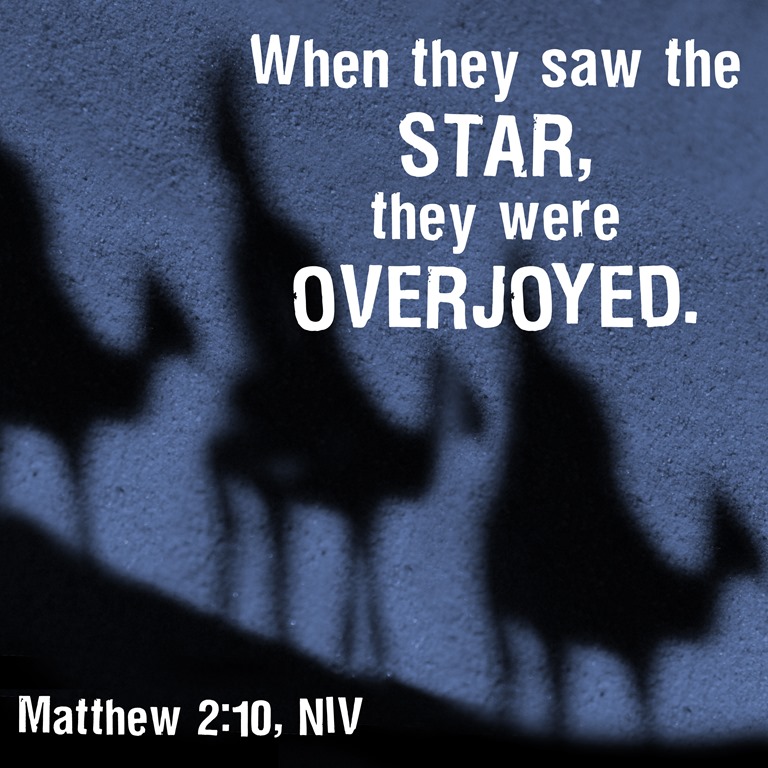
8 He sent them to Bethlehem and said, “Go and make a careful search for the child. As soon as you find him, report to me, so that I too may go and worship him.” 9 After they had heard the king, they went on their way, and the star they had seen in the east went ahead of them until it stopped over the place where the child was. 10 When they saw the star, they were overjoyed.
11 On COMING TO THE HOUSE, they saw the CHILD with his mother Mary, and they bowed down and worshiped him. Then they opened their treasures and presented him with gifts of GOLD and of INCENSE and of MYRRH. 12 And having been warned in a dream not to go back to Herod, they returned to their country by another route.

Matthew’s Purpose:

The main purpose is to show the reception given by the world to the new-born Messianic King. Homage from afar, hostility at home; foreshadowing the fortunes of the new faith: reception by the Gentiles, rejection by the Jews”                   (F. F. Bruce).—Word Pictures in the New Testament

THE HISTORY

1 After Jesus was born in Bethlehem in Judea, during the time of King Herod,

Dateline: Jerusalem, approximately 4 BC (This means that Jesus was likely born as early as 6 BC)

Luke helps us nail down the time a little more specifically:

(Luke 2.1-3)

1 Now it came about in those days that a decree went out from Caesar Augustus, that a census be taken of all the inhabited earth. 2 This was the first census taken while Quirinius was governor of Syria. 3 And all were proceeding to register for the census, everyone to his own city.

Who was Herod?

While many Herods are mentioned in the Bible, this was Herod the Great, named king over all four political districts of Palestine by the Roman Senate. IN OTHER WORDS…HE WAS NOT SUPPOSED TO BE KING BASED ON ROYAL LINEAGE. He ruled from 37 until his death in 4 b.c.

The history of the Herod family is filled with lies, murder, treachery, and adultery. Although Herod the Great was a ruthless, evil man who murdered many in his own family, he also supervised the renovation of the temple, making it much larger and more beautiful, as well as overseeing other building projects. This made him popular with many Jews. After Herod’s death, the districts were divided among three separate rulers. We later read about Herod the Great’s son, Herod Antipas, who killed John the Baptist (Mark 6:26-28) and taunted Jesus (Luke 23:6-12).

                                                      —Life Application Bible Commentary

THE STORY (words and verses)

THREE SEEKING KINGS

Magi from the east came to Jerusalem 2 and asked, “Where is the one who has been born king of the Jews? WE SAW HIS STAR IN THE EAST AND HAVE COME TO WORSHIP HIM.

Magi – Could have been astronomers, rulers, some type of kings

From the east: Persian Empire, modern-day Iran

“We SAW His star…”

· It appears that the star has become invisible for some reason

o The past tense of “saw his star”

o The fact that they have to ask directions

ONE STIRRED KING

3 When King Herod heard this HE WAS DISTURBED, AND ALL JERUSALEM WITH HIM.

Many would accurately say that Herod was already a disturbed man, but when he was bothered so was all of Jerusalem, because they knew first-hand his vicious tendencies, and his violence when it came to protecting his dynasty.

A KINGDOM TOO BUSY FOR THEIR KING

4 When he had called together all the people’s chief priests and teachers of the law, HE ASKED THEM WHERE THE CHRIST WAS TO BE BORN.
5 “In Bethlehem in Judea,” they replied, “for this is what the prophet has written: 6 “‘But you, Bethlehem, in the land of Judah, are by no means least among the rulers of Judah; for out of you will come a ruler who will be the shepherd of my people Israel.'”

7 Then Herod called the Magi secretly and found out from them the exact time the star had appeared.
8 He sent them to Bethlehem and said, “Go and make a careful search for the child. As soon as you find him, report to me, so that I too may go and worship him.”

This is one of those passages that we can pull several things from:

1. Herod was slightly familiar with the story of the promised Messiah (Christ)

2. He was not familiar enough to be expectant of His coming (asked them where)

3. He was more threatened by what God was doing then excited (sent them…)

àCan’t this happen to us as well? We become so consumed with daily living that we neglect to pay attention to what God is doing in us and around us. There are jobs to do, bills to pay, families to raise, futures to plan for, and in the midst of all that activity God is inviting us to find Him. Inviting us to return to Him.

Note: A Promise of Centuries Past Fulfilled:

6 “This is what the LORD Almighty says: ‘In a little while I will once more shake the heavens and the earth, the sea and the dry land. 7 I WILL SHAKE ALL NATIONS, and THE DESIRED OF ALL NATIONS WILL COME, and I will fill this house with glory,’ says the LORD Almighty. 8 ‘The silver is mine and the gold is mine,’ declares the LORD Almighty. 9 ‘THE GLORY OF THIS PRESENT HOUSE WILL BE GREATER THAN THE GLORY OF THE FORMER HOUSE,’ says the LORD Almighty. ‘And in this place I will grant peace,’ declares the LORD Almighty.”

                                                                             Haggai 2:6-9 (NIV)

Is God “Shaking Things Up” to get your attention?

GPS SIGNAL RESTORED

9 After they had heard the king, they went on their way, and the star they had seen in the east went ahead of them until it stopped over the place where the child was. 10 When they saw the star, they were overjoyed.

More evidence that apparently the star had been temporarily hidden from their view, which begs a question. Why? Wouldn’t it have made life much simpler if the star had just remained the guide for the travelers? Jesus and His family could have lived in simple obscurity and never appeared on the radar of a psychopathic king. Why did God…make no mistake, God is in complete control of the heavens…hide the star, forcing the travelers to ask Herod for directions?

A SURPRISE PARTY FOR THE KING

11 On COMING TO THE HOUSE, they saw the CHILD with his mother Mary, and they bowed down and worshiped him. Then they opened their treasures and presented him with gifts of GOLD and of INCENSE and of MYRRH.

GPS: “RECALCULATING”

12 And having been warned in a dream not to go back to Herod, they returned to their country by another route.

THE SIGNIFICANCE – What it means for us today:

SEEKING JESUS IN WORSHIP may mean sacrifice (1-2)

  • Leaving home and loved ones.
  • Giving up time–part of the weekend.
  • Traveling a distance.
  • Braving the elements and weather.

SEEKING JESUS IN WORSHIP may trouble some people (3-8)

  • Sometimes children, spouses, and others don’t understand
  • People may laugh because you go to church on Sunday.
  • Some people may get hostile when you mention the Christ child.

SEEKING JESUS IN WORSHIP should bring us joy (9-10)

SEEKING JESUS IN WORSHIP means coming as Wise Men.

  • Bow Before Him in Worship, Adoration, and Reverence.
  • Offer to Him Gifts of Worship, Adoration and Sacrifice.
  • Obey His Voice in Worship, Adoration, and Faithfulness

Sermon Notes: A Strange way to Save the World

Sermon Series: MATTHEW: THE KING AND HIS KINGDOM

“A Strange Way to Save the World” FBCW01122014

Link to Audio Message: https://sites.google.com/site/firstwallingford/home/sermons 

MaryJosephDonkey

Matthew 1:18-25
18 This is how the birth of Jesus Christ came about: His mother Mary was pledged to be married to Joseph, but before they came together, she was found to be with child through the Holy Spirit.
19 Because Joseph her husband was A RIGHTEOUS MAN and did not want to expose her to public disgrace, he had in mind to divorce her quietly.
20 But after he had considered this, an angel of the Lord appeared to him in a dream and said, “Joseph son of David, DO NOT BE AFRAID to take Mary home as your wife, because what is conceived in her is from the Holy Spirit.
21 She will give birth to a son, and you are to give him the name Jesus,
BECAUSE HE WILL SAVE HIS PEOPLE FROM THEIR SINS.”
22 All this took place to fulfill what the Lord had said through the prophet:
23 “The virgin will be with child and will give birth to a son, and they will call him Immanuel”–which means, “God with us.”
24 When Joseph woke up, HE DID WHAT THE ANGEL OF THE LORD HAD COMMANDED HIM and took Mary home as his wife.
25 But he had no union with her until she gave birth to a son. And he gave him the name Jesus.


I. THE GODLY PURITY OF MARY & JOSEPH

II. THE ANGELIC ENCOUNTERS OF MARY & JOSEPH

III. THE UNFALTERING FAITH OF MARY & JOSEPH
IV. THE TOTAL SURRENDER OF MARY & JOSEPH
 
Three Steps to Opening Your Heart to Obedience

1. Do Nothing – Let Him Direct You.

2. Do One Thing – What He Commands You

3. Do Everything – As He Leads You.