Trail Guide–Directions for the Journey of a Lifetime IV

Forgetting to Take a Break from the Trail to Rest

For me it happened most vividly while I was a student at Bible college. I was taking a full load of courses in my first semester, serving a church that was 65 miles away, and trying to be a good husband and father in my home. I had Old Testament, New Testament, Preaching, A Bible Intensive, and Theology for courses. In addition I had three messages to prepare every week. Needless to say I spent a lot…I mean A LOT…of time reading and studying my Bible. It would not be impossible to say that there were days, especially Saturdays, that I was in God’s Word from the time I got up until I would finally drag myself to bed.

With all of the time I was spending with my Bible open before me you would think that I would evolve into some sort of Spiritual giant in the faith. However, I was slowly and surely sliding in the opposite direction. It became evident in a number of ways in my life. I was becoming impatient with my wife and kids. I was making really poor decisions in a multitude of arenas. I struggled to drive myself to do the things that I had once found so much pleasure and fulfillment in doing.image

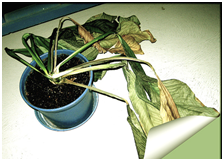
Looking back on it now I understand what was happening. It’s like a peace lily that we had at our home in Florida. We have an unwritten rule in our home that we don’t buy plants. People who don’t know us real well may give us a plant from time to time, but we don’t buy them. We believe that it is unfair to knowingly subject a helpless piece of vegetation to the abuse and torture that living—or attempting to live—in our home would bring. However, if we are going to have a plant it is best to have one that tells us what it needs and when it needs it.

Such was the case with this peace lily. One day this poor plant had become so dehydrated that when I stopped to notice it every leaf and stem looked like it had melted and was slipping out of the pot it was planted in. This poor thing needed water in a critical way. I don’t know how many days it had been, but clearly it had been too long. I was sure it was dead and there was little hope for any recovery. I put the water on it, not so much in mercy, but more to quell my own guilt figuring at least I could say I tried. To my surprise the plant bounced back. It’s recovery was so swift that I was literally shocked. Now, if I were to buy a plant—which remains unlikely—I would buy one of these plants.

Now, here’s the lesson I’m trying to get across. The plant was in the house. There was water in the house. The plant had every advantage of being there with the water in the shelter. However, it had to receive the water personally. That’s what was happening to me at Bible college. I was there studying and reading the Word of God. I was able to sit under men of God who brought deep truths to life for me. I had all of the advantages of being in a place like that with the opportunities I had, but I wasn’t personally receiving “the water” myself. I wasn’t taking time to hear what God wanted to tell me personally. God wanted more that my sermon preparation time. More than the time I was putting in to prepare for the next exam, quiz, paper, or study. God wanted me to come to the well and drink and enjoy what He had provided especially for me. I needed to come and just be quiet with Him. When I started to do that my spiritual strength began to return. The tasks that had become a drudgery took on a new life and vitality. Like that peace lily I made a swift and magnificent recovery.

I wish I could tell you that I never had to relearn that lesson from those days. It would be a lie. Seems like the things that matter most, the things that make the most difference for us, are the things that are so easily swept away in the high speed course of our lives. So, it takes a determination that you are going to pause along the trail and rest with Jesus. It means planning ahead and not allowing things to get in the way of that quiet time with Him.

I hope that I have begun to persuade you that you are going to need to stop along the trail that is before you as a follower of Jesus. Watch for those tell-tale signs (the wilting leaves) that often appear in our attitudes within our relationships. You might well be engaged in some really good things, perhaps great things for the kingdom of God. The thing that matters most however is the quiet time you spend at the feet of Jesus and rest in His presence.

(Next, some tools for making your quiet time the best)

Trail Guide–Directions for the Journey of a Lifetime III

Pausing on the Trail The Practice of Daily Quiet Time

image

As I am writing this section of the study guide I am experiencing things in my own life that are really giving me a new appreciation for taking some quiet time every day. I am being reminded of the critical importance of stopping along the trail to rest and be refreshed.

My goal in this portion of this study is two-fold. First, I want you to understand and accept that taking some time everyday to spend some quiet time with God and His Word has to be a part of your life on this journey. Second, I want to give you some key tools that will help you in your quiet time on the journey.image

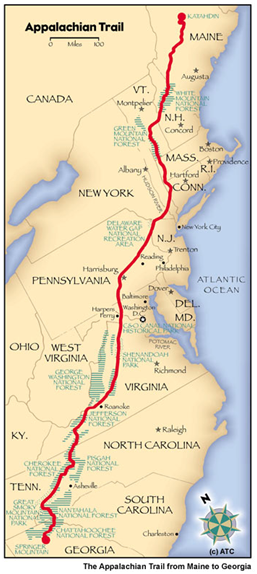
Years ago I had some pretty lofty dreams. One of those dreams was to take six months and hike the entire Appalachian Trail. I have hiked parts of it in New England and even hiked a little around the start of the trail in Georgia. However, I have not taken the time to make the entire trek. I haven’t even hiked a respectable fraction of the trail. At my age and in the physical condition I am in now I doubt that dream will be realized. Now I look forward to hiking the trails of gold in heaven in eternity.

I have, however, had opportunities throughout my life to spend time with people who have done the whole trail. One man, now in his eighties, had made the trek a dozen times in his life, most recently when he was 70 years old. Needless to say I was a little embarrassed and ashamed that I had let my body get to the point that it seems impossible to even consider the hike now. These people shared a lot of their experiences, and every one of them had unique and thrilling experiences.


When I asked these hikers what advice they would give to someone who was considering taking the trip they almost all said the same thing.. Besides looking at me as if to say, “You can’t be serious.” The first thing they would say was not to try it if there wasn’t a tremendous commitment. I learned that the majority of people who set out to make the hike give up within the first hundred miles because it’s hard. If a person isn’t totally committed to the trip they won’t make the trip. When the weather is contrary, when the muscles and bones are in agony, when you see the distance before you, the temptation to step off the trail is incredible. Without a commitment in your heart and soul you will give in and quit.

The second piece of advice they offered was somewhat surprising and unexpected. Almost universally they said that on the trail it was critical to stop and rest frequently. Many of the people who leave the trail leave because they allow themselves to get exhausted and worn down by failing to stop along the trail and rest. Trying to go from sun up to sun down would leave many casualties along the trail. Each of these successful hikers averaged eight hours of sleep or slightly more each night. They stopped and rested several times throughout the day as they were hiking. Younger inexperienced hikers would breeze past them as they stopped to rest, but few of these folks would see the end of the trail.

These two elements, commitment and rest, are also critical parts of our journey on the trail as followers of Jesus. It does take a commitment in faith to follow Him. The trail the believer walks will sometimes be extremely difficult, and we have to place our faith and trust in Jesus all the way. Resting is just as critical. We are engaged in a spiritual conflict that is immense in scope. The fight we face will take all our spiritual energy and stamina. If we don’t stop to rest we may find ourselves defeated along the trail.

That’s what your quiet time offers. You need to understand how important this is. Unfortunately, as with many other things, the only way we learn some of these things is to face the hardship that ignoring this advice can bring.

In the next post I’ll share some of my lessons that I learned the hard way about this.

(to be continued)

Something to Consider–Baptism


Something to Consider – Baptism

On the certificate at the beginning of this part of your journey there was a space for the date of your baptism. If you have not been baptized yet I want you to consider that as we conclude this first step.

What is Baptism

Nothing mystical or hidden happens during baptism. The miracle doesn’t take place in the water, it has already taken place when you made the decision to become a Christ follower and your sins were forgiven and you were granted citizenship in the kingdom of God. Baptism is an outward expression of what has happened in your life. It declares before the church, your family and friends, and anyone else watching, that you have started a new journey in your life, a journey with Jesus Christ as the center of your life.

Quite vividly your being baptized portrays the change that has taken place in your life, and it is one more way of remembering what Jesus did for us. Consider this passage from Romans:

Romans 6:3-4  Or do you not know that all of us who have been baptized into Christ Jesus have been baptized into His death? Therefore we have been buried with Him through baptism into death, in order that as Christ was raised from the dead through the glory of the Father, so we too might walk in newness of life.

So, as you are baptized you set up a mile-marker in your life that identifies that you are on a new path, a new trail. I want you to consider being baptized. Speak with the pastor or your teacher about what is involved and how you can be baptized. The Lord Jesus set the example for us in his own baptism. (Matthew 3:13-17)

Jesus wants you to be willing to publicly declare your faith in Him. Later we will talk more about sharing your faith with others to help them join you on the trail. However, he wants us to talk about our faith in Him without fear or shame. (Matt. 10:32-33) Being baptized is one of the first steps a believer makes in declaring their faith in Jesus.

(to be continued)

Trail Guide–Directions for the Journey of a Lifetime – II

The First Step on the Trail

Security of Your Salvation

If you have decided to receive Jesus Christ as Savior and Lord by faith then you have made the most important decision you will ever make. This is far more significant than the decision to get married, go to college, picking your career. The impact of this one decision will revolutionize your life and will have ripple effects on every aspect of your life. Beginning a journey of faith in Jesus Christ is the first step on the trail.

Take a moment and commemorate this event in your life.

YOUR FIRST STEP ON THE TRAIL

Your Name: __________________________

Date of New Birth: ____________________

Place of New Birth: ___________________

Date Baptized: _______________________

Who was part of helping you make this decision? _____________________________

What was the setting? (worship service, small group, at work) ____________________

______________________________________________________________________

What helped you make the decision? ________________________________________

A Word You Need to Know:

It is ok that you don’t know all the answers. If I could give you one word that I believe would help you as you are starting on this journey for your life it would be the word PATIENCE. It will be really easy to get discouraged in these early stages of your new life. You will be challenged in areas that you might never have thought about. If anyone told you that becoming a follower of Jesus was going to make your life trouble-free then I apologize on their behalf, but they lied to you. If anything you will discover that living as a Christ-follower will be among the most difficult things you have ever done.

DON’T MISS FIRST BASE:

One more thought before we move into the study portion of this leg of the journey. If you were not sure what to put in the spaces above. If you can’t remember a specific time in your life that you made a decision to believe in Jesus Christ—I don’t mean that you can’t remember the specific date, but that you can’t remember ever making that decision—then I want you to really examine this. Is it possible that you have not made that choice for yourself? Consider the following

It was 1908 – in the early days of Major League baseball in America. The Chicago Cubs and the New York Giants were battling it out for the National League championship and the opportunity to play in the World Series. New York first baseman Fred Merkle was in position to be a game-winning hero actually. He was on base when a teammate got a hit that would enable Merkle to score. And he thought he had as he crossed home plate. But the Cubs touched second base and claimed that Merkle had missed that base as he was running to score. The umpire ruled that the almost-hero was out at second because he hadn’t touched the base. That mistake ultimately cost his team the championship.

Imagine – you think you’ve made it home safely, but it turns out you’re “out” because you missed a base you failed to touch. That can happen to people when it comes to the “home” that really matters – an eternal home in heaven when we die. There are just too many passages in the Bible that indicate that people who thought they would make it there will be surprised to find that they can’t get into heaven.

Matthew 7, for example, portrays a Judgment Day scene when people will remind Jesus of all the Christian things they have done, and He will say, “Depart from Me – I never knew you.” Somehow, they missed Christ in the middle of all their Christianity. How does that happen? How can you make sure it doesn’t happen to you? You need to make sure that you didn’t miss first base as you played the Christian game.

It is really important that you not be embarrassed right now. If you believe that you might have missed a step now is the time to do something about it. Perhaps you have been in church for a while, and maybe you have even been in ministry, but you realize that you don’t have that “new birth” moment when you made the choice to become a believer in Jesus Christ. Think of this as the entrance to the trail head that you will be hiking on your journey and pray this prayer in faith.

Dear God, I know that I cannot get into heaven by my own efforts. I need You to  enter into my life and change me. I can’t do it alone. Please forgive me for all I have done wrong, for turning my back on You and from trying my own way.  I believe that Jesus Christ came to die in my place on the cross and He lives to be my Savior and Lord. I accept Him today as King of my life. Please fill my heart with Your presence and give me Your guidance, peace, and eternal life. Thank You for saving me and changing me. I love You Lord. AMEN

Now, go back and fill in the blanks above, and welcome to the family of God. According to Jesus there is a great celebration right now with the angels in heaven. (Luke 15.10)

image

Be Sure of Where You Stand

One of the things you want as you begin the journey is to know that you have sure footing along the journey. You want to know where you stand with the Lord. So let’s consider a few things together.

God wants you to know that you know.

God doesn’t leave us out here to wonder. There are many assurances given to us in Scripture that show us that we have security as believers in Christ. Often, we may have feelings that cause us to doubt or wonder, but God is asking us to trust in our faith, and the facts that He reveals in His Word.

Your Security is Based in God’s Son

Your faith is placed in what God has accomplished for us in the birth, death, and resurrection of Jesus Christ. The whole truth of the Gospel can be summed up in these verses:

Finding Something in your Bible

If you are not sure how to find something in your Bible do not be embarrassed. We all have to learn to walk one step at a time. In the front of your Bible there should be an index listing the pages you will find the beginning of each of the books of the Bible. Locate the book you are looking for. (i.e. John – this is the fourth book in the New Testament) Each book is then divided into chapters. These will be larger numbers appearing in the text. Smaller numbers between the chapters are the verses. So, when you see this:

John 3:16 that would be defined as the book of John, chapter 3, verse 16.

1 John is “First John” and is located near the end of the New Testament and is the first of three books that are letters from John.

1 Corinthians 15:3-4
For I delivered to you as of first importance what I also received, that Christ died for our sins according to the Scriptures, and that He was buried, and that He was raised on the third day according to the Scriptures

Your salvation is not based in what you have done, how good you can be. It is based solely in what Christ has done for you in dying on the cross for your sins, and then rising to eternal life in the resurrection.

Using your Bible look up these verses and fill the blanks

John 3:16
“For God so loved ___________________, that He gave His only begotten _______, that whoever _______________________ should not perish, but have __________________.
1 John 5:11-13
And the witness is this, that God has given us eternal life, and this life ________________.
He who _____________________________; he who does not have the Son of God does not have the life. 13 These things I have written to you who believe in the name of the Son of God, in order that you may ________________________________.

Your Security is Based in God’s Promises

Unfortunately we have all experienced the hurt of having people break their promises to us, so it might be hard to believe when you hear the promises that God has given us. However, God never lies and He keeps His promises. We don’t always understand what God is doing, but we can rest assured that He is fulfilling His plan and purpose and keeping His promises. Two of those key promises appear below, and these give us sure footing as we walk with Christ in the world we live in.

He Promises that We Shall Be Saved –

Romans 10:9
9 that if you confess with your mouth Jesus as Lord, and believe in your heart that God raised Him from the dead, you shall be saved;

He Promises that We Have Eternal Life

John 5:24
24 “Truly, truly, I say to you, he who hears My word, and believes Him who sent Me, has eternal life, and does not come into judgment, but has passed out of death into life.

Your Security is Based on God’s Faithfulness

The promises of any person are only as reliable as the one who makes the promise. With the Lord we have assurance that He is faithful. When we think about that word faithful the thing that often comes to my mind is the relationships that have been shattered because of one person’s unfaithfulness. Pain, hurt, sorrow, these things are part of life when people are unfaithful. God, however, is always faithful. There are numerous times that He assures us of His steadfastness and faithfulness. Here are just a few of those promises found in God’s word that remind us of God’s faithfulness.

1 Corinthians 1:9
God is FAITHFUL, through whom you were called into fellowship with His Son, Jesus Christ our Lord.

1 Thessalonians 5:24
FAITHFUL
is He who calls you, and He also will bring it to pass.

Hebrews 10:23 – Let us hold fast the confession of our hope without wavering, for He who promised is FAITHFUL

Your Security is Based on God’s Spirit

There is one more thing that God has given us to assure us of the security of our position with Him. When Jesus was preparing to depart he offered His followers a promise that He would not leave them as orphans. The following passages remind us of Jesus’ promise to send the Spirit to us. Using your Bible look up the verses and fill in the blank.

John 14:16-18  “And I will ask the Father, and He will give you ______________________, that He may be with you forever; that is ___________________________, whom the world cannot receive, because it does not behold Him or know Him, but you know Him because He abides with you, and will be in you. “I will not _______________________________; I will come to you.”

John 14:25-26  “These things I have spoken to you, while abiding with you. But the _____________, the Holy Spirit, whom the Father will send in My name, He will ______________ you all things, and bring to your ______________ all that I said to you.”

John 15:26-27  “When _____________________ comes, whom I will send to you from the Father, that is _______________________, who proceeds from the Father, He will __________________________________________, and you will _______________________ also, because you have been with Me from the beginning.

Acts 1:8  You shall ______________________ when the Holy Spirit has come upon you; and you shall be _____________________ both in Jerusalem, and in all Judea and Samaria, and even to the remotest part of the earth.”

Romans 5:5  and hope does not disappoint, because the love of God has been poured out within our hearts through ___________________ who was given to us.

2 Corinthians 1:21-22  Now He who establishes us with you in Christ and anointed us is God, who also ______________ and gave us the Spirit in our hearts as a _________.

Ephesians 1:13-14  In Him, you also, after listening to the message of truth, the gospel of your salvation– having also believed, you were ___________________ with the Holy Spirit of promise, who is given as a ___________________________, with a view to the redemption of God’s own possession, to the praise of His glory.

Looking Back at Your First Step on the Trail

It’s important to stop periodically while you are hiking on the trail and review where you are and where you have been. For me it has made all the difference in the world to be able to return to the place where I can regain the sure footing that comes from the assurance of God’s presence and purpose in my life. To be able to recall the things that I acquired at the start of the journey.

 My Security is Based on God’s Son

 My Security is Based on God’s Promises

 My Security is Based on God’s Faithfulness

 My Security is Based on God’s Spirit

Take a moment and fill in this journal page. This will become your personal testimony. God wants you to tell your story to people. It’s the primary way God has enabled His story (History) to be proclaimed and shared throughout time.

In Each Section write three or four sentences that best describe that circumstance in your experience before and after becoming a Christ follower.

  1. Before I became a follower of Jesus Christ my life…
  2. I became a follower of Jesus Christ by…
  3. Since becoming a follower of Jesus Christ my life…

image


(In the Next Post consider Baptism)

Trail Guide–Directions for the Journey of a Lifetime

Trail Guide–Directions for the Journey of a Lifetime

image

Inspiration for a Guide Book

A while back God gave me a vision for a new believers/new members study book that would be a practical and useful guide for people who didn’t have much or any connection previously with church-life and the Christian life.  Over the next few posts I’m going to put what I have developed on here.  None of this is copy-written on purpose because if you can use it or pass it along I want you to do that.  God gave me this and I offer it to anyone who might benefit from it.

I’m also very interested in your feedback, so please let me know what you think and how this could be made even more helpful.

Enjoy the Journey!

—————————————————————

Welcome to the Journey!

The Christian life is a journey. As with any travel the journey we are on is laced with ups and downs. There are times that we come to the summit points of life and we see the panoramic vistas of God’s glorious work in our lives. There are other times that we find ourselves in the darkened valleys of life, shadowed by the canyon walls that encompass us and make it difficult to clearly see God’s purpose and plan. In each circumstance one truth is clear, the journey continues. The trail stretches out before us and we are beckoned on.

My wife and I have been together for over twenty years. Over the course of our dating years and marriage we have walked many trails. We’ve hiked in West Virginia, Florida, Alabama, Georgia, Vermont, and New York. One thing is true of all of these hikes, regardless of where they were. Each trail was marked in some way to help keep us on the right path. We could choose from a number of trails, but each one had a unique color. We chose based on what we wanted our destination to be. For example, if we wanted to end up at the top of the falls we would hike the red trail. Heading to the lake we would hike the white trail. You get the picture. In addition, of all of the hikes and trails I have been on the most challenging and rewarding journey of them all has been in walking with Jesus Christ as Savior and Lord in my life.

In your journey as a believer you are also making the decision as to which trail you will be traveling, and where that trail will ultimately lead you. The trail is marked out for you in the Word of God, and this provides you with a guide for hiking the trails that God has set before you. As with hiking through the mountains the most important part of the journey is right at the beginning as you begin following a trail, making a choice as to which path you will follow. That’s where this book comes in.

This study is intended to help you on your journey. I want to provide you with a sort of trail guide that will help you as you get started on the trip and provide you with markers to follow as you travel. Make no mistake, the trip you are on is not going to be an easy one. As with any other excursion, there will be unexpected delays, unnerving interruptions, and possible hazards along the way. The key to managing these things—I say managing instead of avoiding because they are inevitable–is in preparing for them as much as possible before you encounter them.

My friends, the journey that is before is us incredibly exciting. Perhaps you are reading this study, and you have been a believer for a number of years. You already know that what I have said thus far is true. What I am providing here for you is the book that I wish I had been given almost thirty years ago when I began my journey as a Christ-follower. So, get excited, grab your walking stick, and together, let’s follow Jesus, as He leads us in the journey of a life-time.

Tools You’ll Need for the Trail Guide Study:

  • Bible
  • Note Book
  • Pen
  • Highlighter

(to be continued – Next Session “The First Step on the Trail – Security”)

I Do Not Want to Be Bivocational!!!!

Special Guest Post from Dr. Terry Dorsett, Missionary in Vermont

Note from Big D Bentley: I remember some of the guys I went to school with or knew while I was in Florida seemed to only be looking for the biggest churches and the largest budgets. I always knew one day we would be back in Vermont–or New England somewhere and God was preparing us.  I’m blessed in that my wife has a good job that provides us with insurance and additional income, but I have always been willing to be a “tent-maker” if God called us to that. And what a tremendous joy to be serving where the need is so great.

Terry Dorsett has been a friend and colleague in ministry to many serving in Vermont and throughout New England.  His experience and passion inspire me in a sometimes difficult location to stay the course.  Thanks Terry for your constant encouragement and sharing with us.  -Dave

My PhotoDr. Terry Dorsett serves as a church planting missionary with the North American Mission Board of the SBC. He has a passion for helping young people discover a meaningful faith and then become leaders in sharing that faith with others.

(Link to Terry’s Blog: http://thoughtsfromdrt.blogspot.com/)
I Do Not Want to Be Bivocational!!!!

“But I don’t want to be bivocational.” That was the declaration of a young man whom I recently talked to. He was nearing graduation from seminary and felt led to do ministry in a lesser reached area of the nation. Vermont, which is the least churched state in America, definitely fits the bill for being lesser reached. As the Vermont director for the efforts of my denomination, I have plenty of openings in which he could fulfill his calling to a lesser reached area. But when he found out that most evangelical churches in Vermont have less than 100 people in worship on a typical Sunday morning and that few could sustain a fully-funded pastor, he was discouraged.

I can certainly understand his frustration. After all, he had invested a significant amount of time and money in seven years of schooling in order to gain his Master of Divinity degree from an accredited seminary. In any other field, such an investment of time and money would likely produce a lucrative career. But if a person feels a calling to ministry, and wants to do that ministry outside the Bible belt, the likelihood of finding a fully-funded position drops significantly.

Young people who enter the ministry today are simply going to have to come to grips with the reality that most of them will spend a portion of their career in a bivocational situation. For those who may not be familiar with that term, it simply means that the minister must work a second job in addition to serving a church. It does not mean that the minister is “part-time,” it simply means his ministry position is not fully-funded and therefore he must find additional income from some other source.

The reasons that people want to avoid this situation are numerous, but the most obvious is that it is a lot of hard work. Balancing two jobs and a family is a challenge. Pastoral burn-out among bivocational pastors is notoriously high. Unfortunately, bivocational ministry is a reality that is not going away anytime soon. Both the current economic situation in the nation, as well as the giving trends of younger generations, indicate that churches will continue to struggle to fully-fund pastoral positions for some time.

However, just because there are challenges to bivocational ministry does not mean that such situations should be viewed in a negative light. There are actually a number of advantages that bivocational pastors have over their fully-funded counterparts. Before dismissing bivocational ministry, pastors should consider these advantages:

1. Bivocational pastors are not as dependent on the church for their financial support as fully-funded pastors. This relieves them of the stress of what might happen to their families if they were dismissed from the churches they serve. In some situations, bivocational pastors actually have more personal resources than fully-funded pastors because they have two sources of income.

2. Bivocational pastors often find more opportunities to witness to the lost than fully-funded pastors because they spend more time with non-Christians through their secular employment.

3. Bivocational pastors seldom live in a “pious bubble” that only church people inhabit. Their secular employment requires them to interact with and understand better the needs of non-Christians. Therefore, they frequently feel they relate to the people in their congregations better than fully-funded pastors because they “work” just like the laypeople do. These frequent interactions and the increased sense of relating to laypeople often help bivocational pastors have more realistic sermon illustrations and greater credibility in the pulpit.

4. Bivocational pastors have the ability to serve a larger number of churches because they can serve churches that cannot fully-fund pastors. They also get to experience the joy of allowing churches to fund other needed ministries instead of so much of the churches’ funding going to support their own salaries.

5. Bivocational pastors feel they are better able to encourage the churches they serve to create a culture of the laity using their gifts and the laity devoting more time for ministry since there were no fully-funded pastors “paid” to do “everything” for congregations. Most bivocational pastors feel this creates healthy churches over the long term, though it sometimes creates more stress in the short term.

6. Bivocational pastors often feel it is easier to teach about financial stewardship and/or to solicit contributions from church members. This is because so little of the churches’ funds are spent on the pastors’ salaries that the pastors asking for money is not perceived as being “self-serving.”

7. Bivocational pastors frequently express that they feel more dependent on the Holy Spirit in their sermon preparation and less dependent on their formal theological training or on their elocution or research skills. This greater sense of dependence on the Spirit is perceived as a positive thing by most bivocational pastors. It is interesting to note that the bivocational pastors who expressed this the most strongly had often previously served larger churches in which they had been fully-funded.

8. Bivocational pastors sometimes say that being bivocational gives them valid excuses not to attend denominational meetings that they perceived as irrelevant, uninteresting, and/or promoting things that are not helpful to their own ministry. This does not mean they never attend meetings, but that their bivocational status makes them feel more comfortable attending only the meetings that they perceive as being more applicable to their situation. If those same pastors had been fully-funded, they would have felt a greater obligation to attend meetings that they did not think would be beneficial anyway.

While bivocational ministry has many challenges, it also has many advantages. Learning what the advantages are can help bivocational pastors, or those considering bivocational ministry, feel better about their ministry. When bivocational pastors feel more confident about their roles, they tend to be more effective in their ministries. Churches and denominational leaders need to look for ways to help bivocational pastors celebrate the advantages of bivocational ministries since it is a growing reality in North American church life.

——————————————————————————————-

Terry Dorsett serves as the Director of the Green Mountain Baptist Association and is the bivocational pastor of Faith Community Church in Barre, VT. He is the author of Developing Leadership Teams in the Bivocational Church, as well as numerous church growth articles, and is a frequent contributor to Baptist Press. His blog, Next Generation Evangelistic Network, is read by over 1500 people a month.

Too Many Irons…Not Enough Fire

Do you have too many irons and not enough fire?

We love to be busy.  It helps us feel productive and like we are an asset.  Whether we are busy with family things…work things…school things…church things…sports things…hobby things…whatever things…being busy means we’re needed and accomplishing something.

Years ago—too many for me to want to admit—I worked for Burger King in Rutland, Vermont.  They had a pretty simple unwritten policy…stay busy.  Even if there was nothing to do there was something to do.  During slow periods of business we were to be cleaning, sweeping, stocking, organizing…we were to be doing something other than just waiting for customers.  Sometimes we were busy just for the sake of being busy.  That kind of busy-ness can be frustrating.

Most of the busy-ness of life today is productive busy-ness and we gain a sense of significance and accomplishment from it.  We believe that what we are doing matters and it is making a difference.  Teachers, for instance, are among the busiest people I know.  They put in a full day in the classroom and then spend a significant amount of time at home getting prepped for the next day.  In the end their investment of time and effort should translate into educated children.

Every segment of life has opportunities for us to be busy…and sometimes too busy.

The Problem of Busy-Ness

There are real problems that are evident when people are overly busy.  Consider these:

  • Burn-out
  • Stress
  • Anxiety
  • Neglect
  • Malnutrition

These are some of the conditions that we see increasing today as work-loads increase and opportunities for rest and down-time decrease.  Families struggle and often pay the price for our “industriousness.”  We try to justify ourselves by declaring we are so busy to provide for them, but what if what they really need is the one thing that our busy-ness takes from them.  Ourselves.

Before proceeding check out this video by Casting Crowns

Chasing the American Dream may mean we Lose it All


What Does our Busy-ness Mean Spiritually

Being overly busy can also be a hindrance to our relationship with God.  Let’s face it, often the first thing we let go of in the crush of life is our grip on God.  We start skipping prayer and quiet times and we pour more and more of ourselves into other pursuits.  We find ourselves exhausted, tired, spent, and have nothing left to give to the One who gave us everything.

We start letting go of the commitments and calling that God has placed in our lives, again justifying it the whole time to quell the conviction and guilt we feel through it. 

  • It’s for the kids
  • I’ll get more involved later
  • It’s not for very long
  • God will understand
  • No one else is having to do all I do

Whatever phrase or excuse fits best, they all say the same thing—something we would never say aloud.

“GOD ISN’T THE MOST IMPORTANT THING TO ME.”

Does that seem harsh?  Certainly that’s not the message you intended, right?  But, that’s exactly what we’ve declared.  These things I’m involved in…good as they might be…have replaced God as the center of attention and affection in my life. 

What Can I do?

So, what can I do to change this situation?  Mind you, none of these come easy, especially if we have a tendency to be “busy” people.

  • Learn the hardest word to say – “NO.”
    • Sometimes we just have to say no to things…even good things, so that we can focus our attention and affection on the best things—the God things.
  • Learn the hardest practice of life – Let Go
    • Like saying “no” to opportunities that are offered to us, letting go of some of what we are already involved in can be difficult, but we have to measure the amount of our attention and affection these pursuits are sapping from God in our life.
  • Learn to take “Time Out” daily
    • Somewhere in every day we need to get some time away from the noise, the activity, the busy-ness, and get our focus right.  Let me share an experience from Scripture that illustrates this.

Take a moment and read Joshua 9:1-15  <–Click here to see it online

take note of verse 14…

14 Then the men [of Israel] took some of their provisions,

 but did not seek the Lord’s counsel.

Isn’t it strange that after all that they had experienced and seen these leaders didn’t take the few moments it would have taken to consult the Lord about this?  Were then too busy?  Too arrogant?  Too deceived? 

Fact is, if we don’t pause to consult God because we are too busy for Him then we are going to eventually wind up in a mess.  Overloaded and underprepared…like “Pedro” here.

So, take an inventory.  Are there things that you are not doing in the kingdom because you are so involved and busy with other things?  Ask, “what difference will this effort and endeavor make when I’m gone from this world?” 

Invest in the eternal…in the kingdom…and let your attention and affection be on God.

Need a simple formula to follow?  Here’s what I strive for:

  • 1st Place in My Life – God, Jesus, and the things of the Spirit and Kingdom
  • 2nd Place in My Life – Family (My wife and then my kids)
  • 3rd Place in My Life and Beyond – I sincerely believe that if these two are in their right place the rest will fall into place and I won’t have to worry or wonder about what my priorities are.

Blessings,

Big D

Am I Making Excuses or Making Changes?

Can This Be Said of You?

  • “Something is different about you.”
  • “You sure have changed.”
  • “What happened to make you so different?”
  • “Why don’t you do what you used to do?”

Change…difference…alterations…  Can these things be said about you since your relationship with the Lord began?

Relationships change us.  We know this is a fact.  When I was single I lived as a single person.  When I married my life changed.  My relationship with my wife changed my behaviors and activities.  Fact is, if married people don’t change when that relationship starts they probably won’t be married for long.  Because, relationships are supposed to change us.  

So, why is it that so many people claim to have a relationship with God, but feel like they don’t have to experience any changes in their lives?  True, for some the changes might be slight, but still there.  For others the changes will be drastic and dramatic, real life changes.  Sometimes these changes happen incredibly fast, and other times they occur over periods of time, but there is still change visible.

Think about how marriage or even dating relationships change us:

  • We stop “seeing,” “hanging out,” dating other people.
  • We begin spending significant amounts of time with one person specifically
  • We start wanting to make this person happy, pleased, comfortable, content with us.
  • We change the places we go and the events we attend (Stop some and start others)
  • We alter our language and the way we talk, the things we say
  • We change the choices we make in a variety of categories

See, things change.  Think for a moment of what you have changed because of a relationship you have/had with a bf/gf/spouse.  What changed?  What stayed the same?  Did any of these lead to conflict?

Our Relationship with God Changes Us

God meets us right where we are, with all of our wounds, baggage, sin.  But He doesn’t want us to stay there.  He works in our lives and He’s giving us what is needed for change, but we have to be willing.  For some changes it means we have to release some things, possibly things that have been very important to us before.  For other changes it means taking on some things that we wouldn’t have been willing to do before.

Why make these changes?  We change because of the relationship.  Relationships change us.  Problem is that we don’t like to change.  So, with God it becomes easy to make excuses.  We find ourselves tolerating things in our lives that we shouldn’t.  We excuse out actions and behaviors with a flippant, “That’s just how God made me” when we should be saying, “God, forgive me.”  None of us are immune to this, and the culture and community we live it makes it far more acceptable to compromise then to commit and change.

Need some proof?

  • The divorce rate in society is only slightly higher than in the Christian community.
  • Adultery rates among believers is incredibly high
  • The crimes of child molestation and abuse within the church are staggering.
  • Reports of Christian men sucked into the lure of pornography are shameful
  • Drug and alcohol addiction and abuse among the church mirrors the lost

Now, don’t hear me say that if you are engaged in these behaviors you shouldn’t be in the church.  If we are sincere about Christ’s purpose for the church we will recognize it as a hospital for the sin-sick and not simply a display case for the divine.  We are here precisely because these issues exist and God wants to change lives.   It’s just time that we stop making excuses and justification for our own sinful behaviors and we start bringing them to the cross.

national day of prayer

Today is the NATIONAL DAY OF PRAYER (always the first Thursday of May).  My custom is to read the passage of Scripture from 2 Chronicles where Solomon has completed the temple and is dedicating it to the Lord.  It was in this reading today that God pricked my heart about this in a very familiar passage.

2 Chronicles 7:14
14 and My people who are called by My name humble themselves, pray and seek My face, and turn from their evil ways, then I will hear from heaven, forgive their sin, and heal their land.

As in that day with Solomon, God had done all that was needed to experience incredible blessings and benefits with this vital relationship with Him.  It was all up to the people to respond and to turn from their evil…wicked…selfish and self-serving…ways and return to Him. 

The same is true right now.  We need to choose to stop making excuses and start moving toward change.  When we start to hear comments like I listed at the beginning of this article we will know we’re on the right track.  People around us…closest to us…should recognize that something is different about us, that we are changing.  They might not understand it, and they might not like it, but they should see it.  In addition, these changes should point them all in one direction—the cross.

So, what about the change in your life?  Is it there?  Do people notice it?  Have you chosen instead to make excuses?  “This is just who I am.”  Jesus gave His life so that you could have a changed life.  Claim it…receive it…and live it

In closing check out this video by one of my all-time favorite Christian artists.

So, What About the Change in You…….


Until the next time…

God Bless you in the Change!